To be recommended by ChatGPT and other AI assistants, a small business needs to be easy to find, easy to understand and easy to check: a website that AI crawlers are allowed to read, pages that answer its customers' questions clearly, structured data that says who it is, and consistent information elsewhere on the web (Google listing, reviews, profiles, videos). Nothing guarantees a mention, and nobody can sell you one. These steps improve your odds, and they help your Google rankings too.
I have been a freelance web developer since 2017. I have applied everything below to my own website, and I will tell you honestly what I have seen.
How does an AI choose which businesses to recommend?
When someone asks ChatGPT which provider to hire for a new website, or which firm to see in their town, the assistant does not look things up in a paid directory. Depending on the question, it draws on what it learned during training and, more and more often, on a live web search whose sources it cites.
Nobody knows the detail of its criteria, and it would be dishonest to claim otherwise. What you can observe, though, is fairly consistent:
- it picks up pages that answer the question directly, not pages that circle around the topic;
- it favours information it can cross-check: the same name, the same business, the same prices, across several sources;
- it can only cite what it can read: a page blocked to crawlers, or whose text only appears once scripts have run, is unlikely to be used.
In other words, these are the basics of good SEO, with one extra demand: being clear enough for a machine to sum up your business in one sentence without getting it wrong.
What does this effort produce on a real website? My experience.
ChatGPT now mentions my business in some of its answers. Those mentions, however, bring few direct visits to my website.
The topics it cites me on most are content strategy and comparisons of providers: questions such as "how do I choose", "agency or freelancer", "how much does it cost". Those are exactly the topics on which I have published detailed articles, with my real prices and reasoned comparisons.
I draw three lessons from this, without generalising them:
- Being cited is not being visited. The AI often gives a complete answer: the user remembers a name and does not necessarily click. A mention builds awareness; it does not replace your Google traffic.
- You get cited where you have actually written something. The topics that come up match my most thorough articles, not my sales pages.
- I cannot attribute the result to one specific action. I put everything in place at the same time. Here is the list, without claiming to know which item mattered most.
What I did: articles that answer specific questions, YouTube videos in three languages in my own voice, an llms.txt file, a robots.txt open to AI crawlers, structured data on every page, a business profile on ChatGPT and a Google Business Profile. These figures cover one website over a short period. They show what is possible, not what you will get.
Can AI crawlers read your website?
This is the first thing to check, and the one most often missed. Plenty of websites block AI crawlers without knowing it: a rule added by the host, a security plugin, an overzealous firewall.
- The robots.txt file. It tells crawlers what they may read. Mine explicitly allows the crawlers of generative engines, such as OAI-SearchBot and GPTBot from OpenAI, ClaudeBot or PerplexityBot. OpenAI documents its crawlers and what each one does.
- The llms.txt file. This is a proposed format: a plain-text summary of your website for language models. It is not a standard, and nothing guarantees that assistants read it. I added one because it takes little work and forces you to summarise your business, prices and key pages clearly.
- Text that can be read straight away. Important content should be in the page's HTML, not only after scripts have loaded. Speed matters too, for crawlers as much as for your visitors.
If you don't know what your robots.txt says, type your domain name followed by /robots.txt into your browser. The file is public and the check takes ten seconds.
What content do AI assistants pick up?
AI assistants pick up passages that answer a question. Hence a few writing rules I apply to every article:
- a direct answer in the first paragraph, in two or three sentences, before any detail;
- subheadings phrased as the questions your customers ask;
- verifiable facts rather than promises: your starting prices, your lead times, your real projects;
- an FAQ at the end of the page, covering common questions in a few lines each.
The most underrated point is price. A business that says "price on request" everywhere leaves the AI with nothing to say when someone asks about budget. My guide to website prices gives my starting prices, excluding VAT: exactly the kind of question where an assistant looks for a figure.
Comparisons work too, provided they are honest, which means saying when the other option is the better fit. That is the spirit of my article mobile app: agency or freelancer, which explains when an agency is the better choice.
Write about what you genuinely know. The questions you get on the phone, the mistakes you see your clients make, the trade-offs you weigh every day: that is the content an AI cannot find anywhere else.
What are structured data and business listings for?
Structured data is markup your visitors never see, which describes your page to a machine: who wrote it, which business, which services, which questions and answers. Google explains the principle. On my website, every article declares its author, date and FAQ, and the home page describes my services and starting prices.
Business listings play the same role away from your website:
- your Google Business Profile, essential if you serve local customers; I explain why it does not replace a website in website vs Google Business Profile;
- a business profile on ChatGPT, which I filled in with the same information as my website;
- your profiles on the platforms of your trade (for me, Malt and LinkedIn), and your customer reviews, covered in my guide to Google reviews.
The rule that matters: the same name, the same description and the same services everywhere. An AI that finds three different versions of your business has reason to hesitate.
Do you also need videos and several languages?
It is not compulsory, but it is one more source. I have published YouTube videos in French, English and Spanish, in my own voice, covering the topics of my articles. Each video is embedded in the matching article, with its transcript in the structured data, so the text and the video confirm each other.
Versions in several languages widen the range of questions you can answer: an assistant asked in English or Spanish will tend to look for sources in that language. That is useful if you target customers abroad, and unnecessary otherwise. The technical rules are in my multilingual SEO guide.
For a local business, a short video showing your workshop, your team or a job in progress is worth more than a glossy video that says nothing concrete.
What should you not expect?
Better to know before you start:
- Nobody can guarantee a recommendation. AI answers vary with the wording, the user and the moment. Be wary of any offer that promises you a place in ChatGPT.
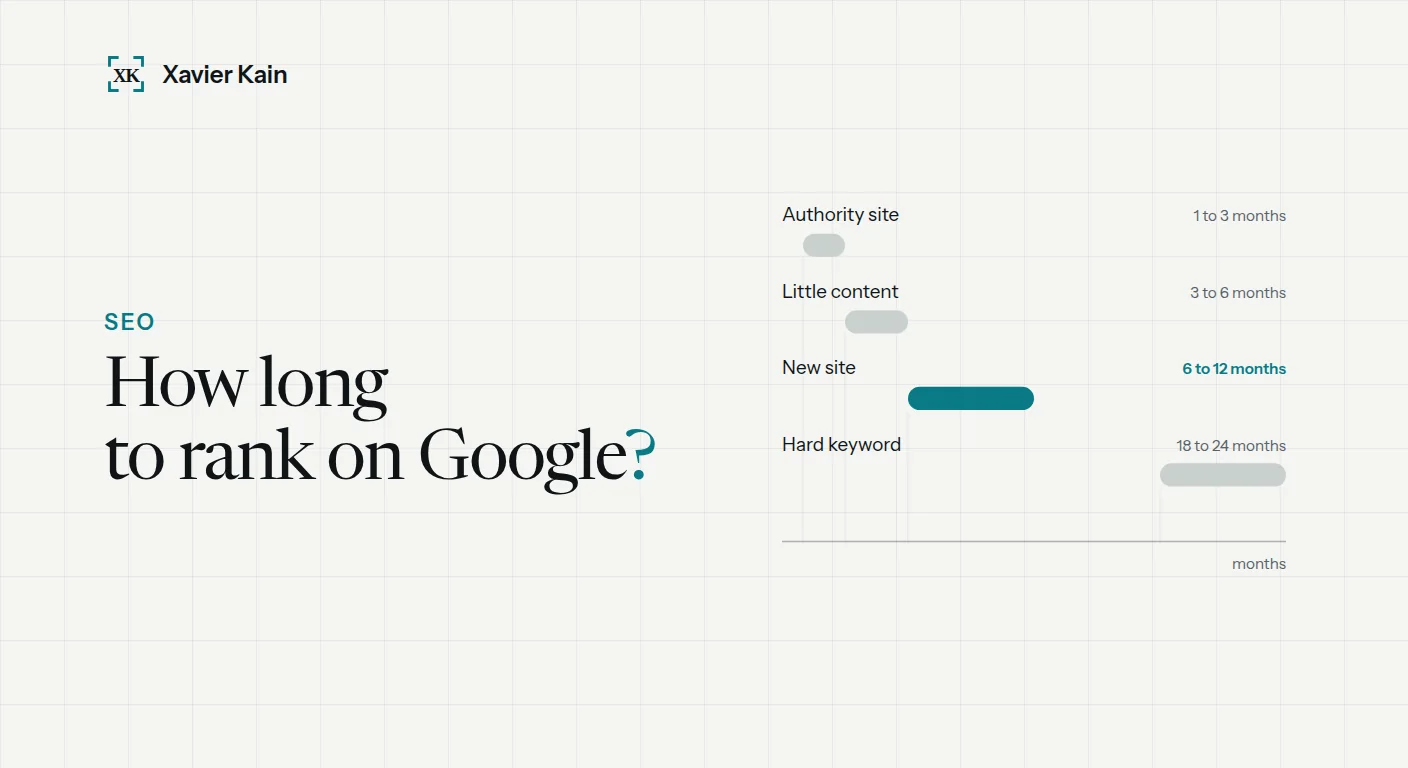
- Results take time. As with Google, your pages have to be discovered, read and cross-checked. I cover these timescales in how long it takes to rank on Google.
- Clicks remain rare. My own experience shows it. Measure enquiries instead, and add "an AI assistant (ChatGPT, etc.)" to the answers available for "how did you hear about us?" on your contact form.
- Shortcuts backfire. Fake reviews, mass-generated pages, paid mentions: what fools a machine for a while ends up showing, and damages your credibility with the customers who check.
Where should a small business start?
In this order, from quickest to longest:
- Check that your robots.txt does not block AI crawlers.
- Create or complete your Google Business Profile and your business profile on ChatGPT, with the same information as your website.
- Rewrite the first paragraph of your service pages so that it answers, in two sentences: what you do, for whom, where, and from what price.
- Add basic structured data: business, services, FAQ.
- Publish, at your own pace, articles that answer your customers' real questions.
- Measure enquiries and the source your new customers give.
If your current website cannot do all this (no access to the code, a closed website builder, slow pages), a redesign may be worthwhile. With me, a simple WordPress website starts at €1,500 excl. VAT, with SEO settings and structured data included, and maintenance starts at €40 excl. VAT per month. The service is described on the WordPress website development page. You can choose this offer directly, or book a 15-minute call to talk it through first.
FAQ: getting recommended by AI.
Can you pay to be recommended by ChatGPT?
The recommendations ChatGPT makes in its answers cannot be bought from a provider, and nobody controls those answers. Be wary of any offer that guarantees you a place. What you can do is make your business easy to find, understand and check.
Is an llms.txt file compulsory?
No. It is a proposed format, not a standard, and nothing guarantees that an assistant reads it. It takes little work and forces you to summarise your business clearly, which is useful in itself. Robots.txt comes first: if it blocks AI crawlers, nothing else helps.
How long does it take to be cited by an AI?
There is no guaranteed timescale. Your pages must first be discovered and read, then cross-checked with other sources. Think in months rather than weeks, as with Google, and judge progress by your enquiries rather than by a single AI answer.
Does being cited by ChatGPT bring in customers?
Sometimes, but rarely through a direct click. On my website, mentions bring few direct clicks. The value lies mainly in awareness: a prospect who read your name in an answer recognises it later on Google or on your listing.
Do you need a new website to be visible in AI assistants?
Not necessarily. Start with robots.txt, your listings, the first paragraph of your pages and structured data. A redesign makes sense if your website does not allow these settings, if it is very slow, or if its text only becomes readable once scripts have loaded.
Sources.
- OpenAI: overview of OpenAI crawlers, what OAI-SearchBot and GPTBot do
- llmstxt.org: the llms.txt proposal, the format and its purpose
- Google Search Central: introduction to structured data, how the markup works