Almost every restaurant search happens on a phone, often less than an hour before the meal. The visitor wants three things: is it open, what is served, and at what price.
If those three answers are not there in ten seconds, they go back to the results list. Online ordering, however useful, never makes up for a menu nobody can find.
The three pieces of information that decide.
Hours first — real ones, not the ones from two years ago. A customer who travels to a closed door usually does not come back, and often says so in a review.
The menu next, in HTML rather than PDF. A PDF does not index properly, does not read comfortably on a phone screen, and blocks any internal search. It is the single mistake that costs both rankings and customers.
Prices last. A menu without prices creates hesitation, and hesitation benefits the restaurant next door that shows them.
| Format | Indexable | Readable on mobile | Updating |
|---|---|---|---|
| Downloadable PDF | Very poorly | No — pinch to zoom | Remake the document |
| Scanned image | No | No | Remake the image |
| HTML page | Yes, fully | Yes | Edit some text |
Click and collect or delivery platform.
Delivery platforms commonly take 25 to 35 % commission. Against restaurant margins that turns a profitable dish into a loss-making one. They do bring visibility a site alone does not have.
The sensible trade-off is to stay on the platforms for discovery and to push every customer towards direct ordering for their next order: a note on the receipt, on the packaging, in the bag. For that direct ordering, I build e-commerce websites with online ordering and payment.
The calculation to run
Count platform orders per month, multiply by average basket, then by the commission rate. That is the annual cost of having no direct ordering. It almost always exceeds the price of the site.
Booking: the most profitable feature.
An online booking is made outside service hours, when nobody picks up the phone. That is revenue that would otherwise be lost, at no marginal cost.
- A simple form is enough: date, time, covers, name, phone.
- SMS confirmation sharply reduces empty tables.
- A reminder the evening before reduces no-shows further.
- Do not ask for card details below a certain standing: it drives people away.
The classic mistake
A booking form that only sends an email. Nobody in a kitchen reads email during service. Bookings must arrive where the team actually looks — SMS, a front-of-house tablet, or a notification.
What commissions actually cost over twelve months.
“The platform brings me customers” is a fair statement. It becomes debatable once you put the amount next to it. Take an ordinary site: 400 orders a month, an average basket of £23.50, which is £112,800 of annual volume flowing through a platform.
Rates sit around 25 to 30% on orders the platform delivers, and 12 to 15% when the customer collects. A direct order on your own site costs only the payment provider's fee — roughly 1.5% plus 20p per transaction with Stripe or SumUp — plus hosting and the amortised cost of the build.
| Ordering channel | Deduction | Monthly cost | Cost over twelve months |
|---|---|---|---|
| Platform delivery | 28% | £2,632 | £31,584 |
| Platform collection | 13% | £1,222 | £14,664 |
| Direct order on the site | 1.5% + 20p | £221 | £2,652 |
| €3,500 site + hosting, first year | build amortised | — | €3,500 build, then about £2,800 in fees and hosting |
The break-even point depends on one thing only: how much of the volume you manage to bring back. A €3,500 site pays for itself in roughly four months if a third of platform orders move to direct. If you recover only a tenth, expect closer to eleven months. Both scenarios are plausible, and the gap between them is not decided by the website: it is decided by what goes into the delivery bag, onto the receipt and onto the packaging, order after order.
What the table does not show
The platform charges heavily for something the site does not do: bringing you a customer who had never heard of you. So the question is not “platform or site”, but how many already-won customers keep going through the platform. Those, you pay for a second time every month.
Photos: what makes people hungry and what slows the page.
A dish photographed on a phone next to a window around midday works better than a stock image bought for a tenner. The customer compares what they see with what they get; the gap between the two is one of the first complaints that shows up in reviews.
Three sets are enough: six to ten dishes, the empty room before service, the team. The empty room shows size, light and layout — three questions asked by anyone hesitating to come with their parents, a baby or a wheelchair. Team photos do what no plate shot can: they give the place a face, and they are often the most viewed images after the food.
What hurts: dishes retouched into saturation, blurry vertical snaps taken mid-service, and stock images recognisable at a glance. What weighs, literally: a JPEG straight out of a camera is five megabytes and wrecks load time on mobile. A gallery of twelve uncompressed photos is sixty megabytes sent to someone standing at a tube exit.
| Treatment | File size | Effect on mobile display |
|---|---|---|
| Straight from camera, 4000 px | 4 to 6 MB | LCP beyond 6 seconds on 4G |
| Resized to 1600 px, JPEG quality 80 | 250 to 400 KB | LCP around 2.5 seconds |
| WebP or AVIF at 1600 px | 80 to 150 KB | LCP under 2 seconds |
The one setting that does the job
Resize to 1600 pixels wide, export as WebP, and let the browser pick the served size through the srcset attribute. Three minutes per photo, once. The gain shows up in Largest Contentful Paint, which needs to stay under 2.5 seconds.
A menu that changes weekly, editable in a minute.
A seasonal menu that changes every fortnight cannot depend on a supplier. If changing one dish means sending an email and waiting two days, the online menu will be wrong half the year — and a wrong menu costs more than a missing one, because it produces disappointed customers instead of hesitant ones.
Separate what moves from what does not
The core menu — starters, permanent mains, drinks — changes two or three times a year. Daily specials and the lunch menu change every week. Those two blocks do not call for the same tooling: the first can live in the site's code, the second has to be editable from a phone, standing in the dining room, ten minutes before service, by whoever wrote the specials on the board. In practice a structured text field and a save button are enough. Installing a full CMS for three lines of specials is fitting a boiler to heat a saucepan.
On the markup side, schema.org's Menu type attached to a Restaurant lets search engines pull menu items straight into results. That assumes an HTML menu: a PDF cannot be marked up, cannot be read comfortably, and cannot be updated in a minute. There is no version of this story where the PDF wins, including when the designer delivered theirs first.
Two details that cost money when forgotten: a visible last-updated date, which reassures the visitor that prices are current; and version history, so you can retrieve last year's menu when a customer asks for it or an inspection requires it. A version-controlled text file does that job with no database, and costs nothing to run.
Allergens: what the notice has to say.
Any establishment serving meals must tell customers which of the fourteen regulated allergens are present in the dishes on offer. In France the information must be written down and freely consultable on site, without the customer having to ask: a notice, the menu, or a document available in the room.
The website is not the legal medium, but it becomes its natural extension as soon as the menu is published there. Someone with an allergy reads the menu before choosing the restaurant, not once seated. An online menu that says nothing on the subject removes that customer silently: they will not ring to ask, they will go elsewhere.
Two implementations hold up: a short mention or an icon per dish, or a summary table crossing dishes with the fourteen allergens. The second needs more data entry upfront but is easier to keep current when the menu changes, because everything sits in one place. Budget half a day to build the table the first time, with the chef rather than from a desk: sauces, coatings and stocks are the lines everyone forgets.
One line not to cross: the site replaces neither staff training nor the check in the kitchen. Write down what you know, say how to ask on site, and do not promise an absence of traces the kitchen cannot guarantee in a shared workspace.
Check the wording at source
The applicable French texts are published on service-public.fr and on the DGCCRF pages of economie.gouv.fr. Re-read the exact wording before publishing an allergens page: it has to say the same thing as the notice in the dining room, word for word.
Reviews: rhythm counts more than the score.
A 4.3 rating with comments dated last month beats a 4.7 whose latest review is eighteen months old. Readers look at the date before the number, because a restaurant changes team and menu far faster than it changes its average.
Replying is the only lever you genuinely control. A reply within forty-eight hours, signed with a first name, picking up a specific detail from the review, is worth more than ten identical answers pasted in a row. On a negative review, the reply is not addressed to its author but to the thirty people who will read it afterwards: acknowledge the fact, say what has been fixed, offer a direct contact, then stop.
What is forbidden and eventually shows: buying reviews, having the team or family write them, tying a discount to a rating. It counts as a misleading commercial practice, and platforms remove the batches they spot. A genuine review cannot be deleted either: removal can only be requested for abusive, defamatory or plainly false content, and the success rate is low.
The site plays a measured part in all this: show three or four recent reviews naming their source, and link to the profile to read the rest. A carousel of anonymous, unverifiable testimonials achieves exactly the opposite of what it is meant to.
Ask without pushing
A QR code on the bill opening the review form directly, with nothing conditioned on it and no filtering by score, remains the most solid method. Two to four reviews a week are enough to keep a profile alive; a spike of thirty in three days attracts the attention of automated filters.
The Google profile and the site work together.
For a restaurant, the Google Business Profile often gets more views than the site. But the site feeds the profile: hours, menu, photos, booking link.
Both must say exactly the same thing. An hours mismatch between profile and site is a negative signal, on top of being a source of unhappy customers.
Key points
- Correct hours, HTML menu, visible prices: everything else comes after.
- 400 platform orders a month is close to £31,600 of commission a year: a direct-ordering site pays for itself in four to eleven months.
- Shoot in daylight and publish in WebP under 150 KB.
- Make the daily specials editable, not the whole menu.
- State the fourteen allergens on the online menu, without promising an absence of traces.
- Answer reviews within forty-eight hours; never buy any.
- A booking must land where the team looks, not in an inbox.
FAQ — Restaurant websites.
Do you need a site when you already have a Google profile?
The profile answers immediate questions; the site carries the full menu, commission-free booking and the story of the place. The profile captures, the site converts — and you do not control the profile.
What does a restaurant website cost?
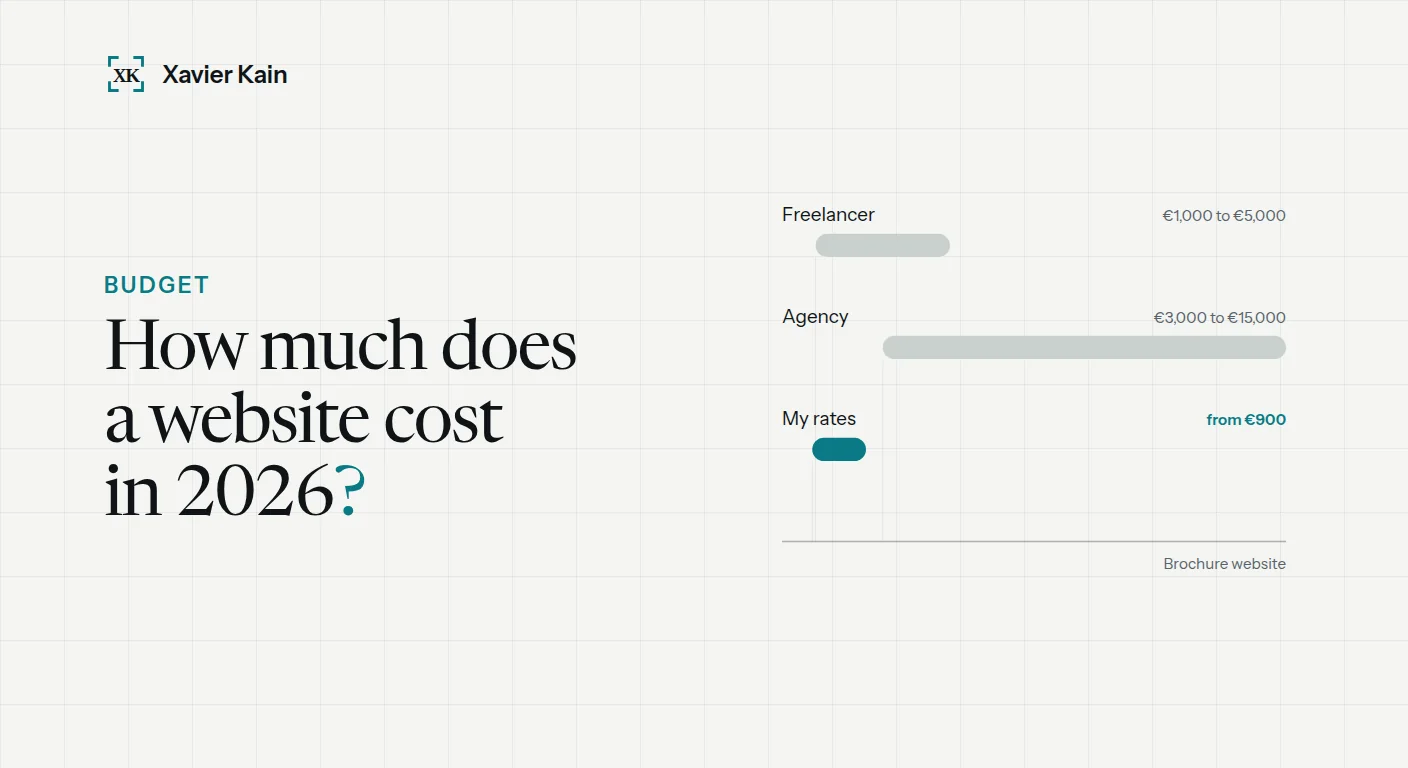
Usually €2,000 to €2,500 for a brochure site with menu and booking. From €3,500 with online ordering and payment, depending on features. The menu is usually most of the setup work.
How do you handle a menu that changes often?
Separate what is stable from what changes. A permanent page for the core menu, an editable block for daily specials, changeable in a minute from a phone.
Is online payment required for click and collect?
No. Pay-on-collection works, but pushes up uncollected orders. Prepayment almost eliminates them — weigh that gap before deciding.
Is a dedicated catering or private hire page worth it?
Yes as soon as you do any, even occasionally: the margin beats regular service. A page with a form asking for the date, the number of covers and a budget range qualifies the enquiry before the call. These events are decided three to six weeks ahead and the client is asking several venues: reply within twenty-four hours or the quote goes elsewhere.
How long does it take to go live?
One to two weeks for a brochure site with menu and booking, three weeks with ordering and payment. The limiting factor is almost never the development: it is collecting the copy, the current prices and the photos, which depends on your availability outside service.
Sources.
- Google — Structured data for local business — hours, menu, address markup
- schema.org — Menu — structuring an HTML menu
- web.dev — Optimize LCP — image weight and rendering
- EU Regulation 1169/2011 — food information — allergen information in French catering
- ICO — Cookies and similar technologies — consent and analytics